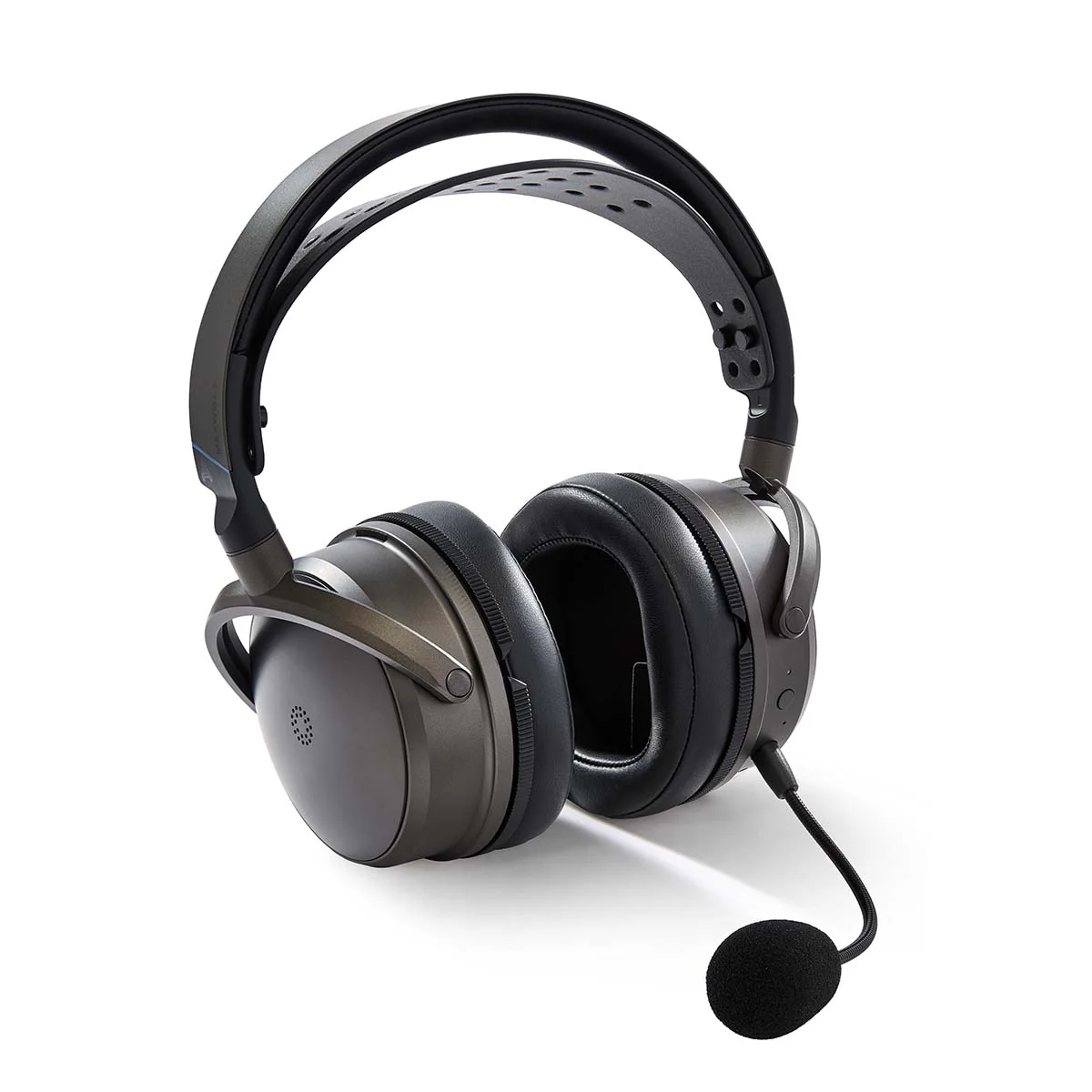
Audeze Maxwell 2 Wireless Gaming Headset
Born from a company that started in a Southern California garage on a quest to adapt NASA technology for high-resolution audio, Audeze has a reputation for building some of the world's most technically advanced headphones. The new Maxwell 2 gaming headset takes their legendary planar magnetic driver technology and delivers what gamers actually need: hyper-precise directional imaging for competitive play, audiophile-grade immersion for cinematic games, and a monstrous battery life so the headset never dies mid-session.
When we got these into our testing lab, we wanted to see if they could truly bridge the gap between a competitive shooter headset and a cinematic single-player experience. What we found was a headset that effortlessly handles both, while still feeling like true reference-grade audio gear when you throw on a high-res music playlist, setting it apart from most other gaming headsets on the market today.
Let’s dig into the technology driving this headset, what has changed from the original award-winning Maxwell, and why the Maxwell 2 has become such an easy recommendation for anyone who wants one headset that can do it all.

What is Planar Magnetic Technology?
To understand why the Maxwell 2 sounds so different from a standard gaming headset, you have to understand the drivers. Most gaming headsets use traditional dynamic drivers (essentially tiny cones pushed by a voice coil). The Maxwell 2 utilizes massive 90mm Planar Magnetic drivers.
Instead of a cone, a planar magnetic driver uses an ultra-thin, lightweight diaphragm suspended between magnetic arrays. Audeze takes this a step further with three proprietary technologies:
- Uniforce™ Voice Coils: Delivers uniform driving force across the entire diaphragm to achieve near-zero distortion.
- Fluxor™ Magnets: An incredibly powerful magnetic array that doubles the driving power for high efficiency.
- Fazor™ Waveguides: Manages the flow of sound waves to prevent resonance, resulting in a more accurate frequency response and holographic 3D imaging.
What’s New: Maxwell 2 vs. Maxwell 1
Audeze didn't reinvent the wheel with the Maxwell 2; they polished a formula that was already winning awards.
During our A/B testing between the original Maxwell and the Maxwell 2, a few core differences immediately stood out:
- S.L.A.M. Acoustic Management: Trickling down from Audeze's $6,000 flagship headphones, the new SLAM (Slam Acoustic Management) system reshapes how bass energy behaves within the ear cup. Out of the box, our team found it delivers a warmer, slightly friendlier tuning with fantastic body. It isn't necessarily a massive increase in literal bass quantity, but rather a highly controlled, incredibly separated low-end that responds beautifully to EQ.
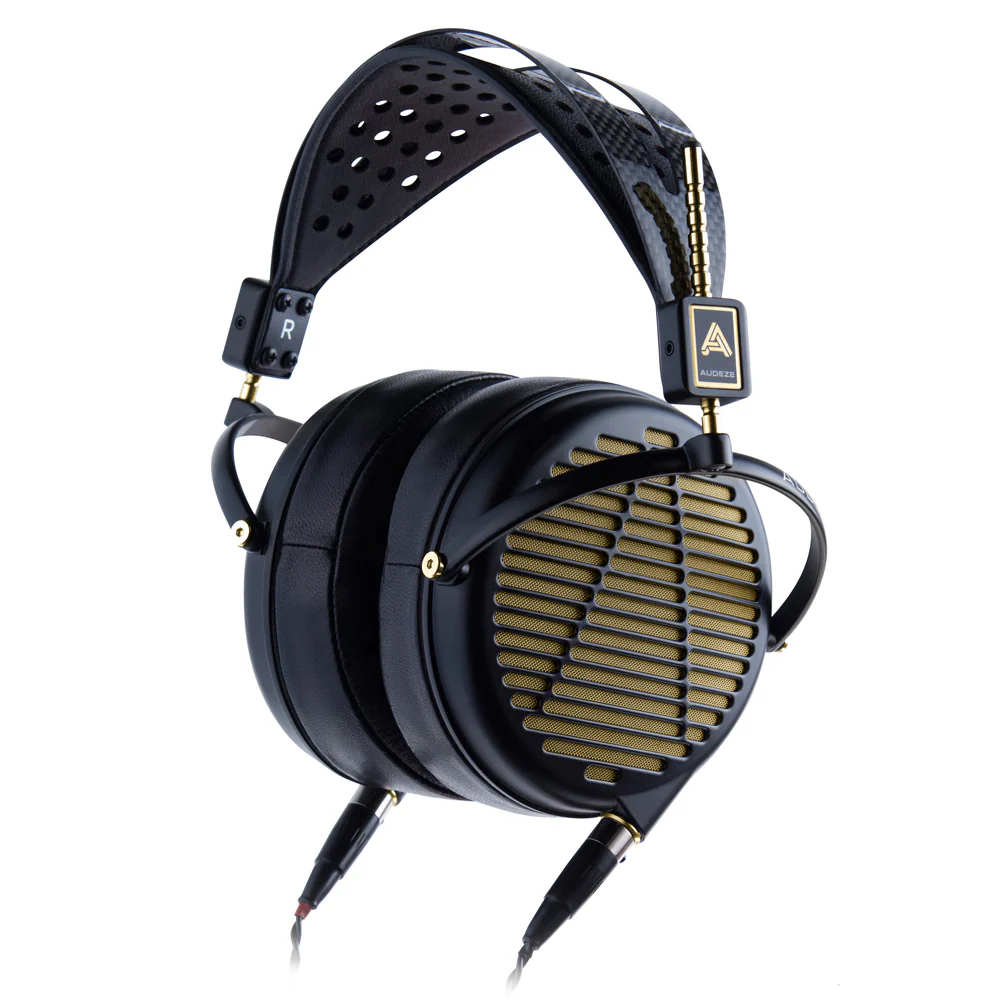
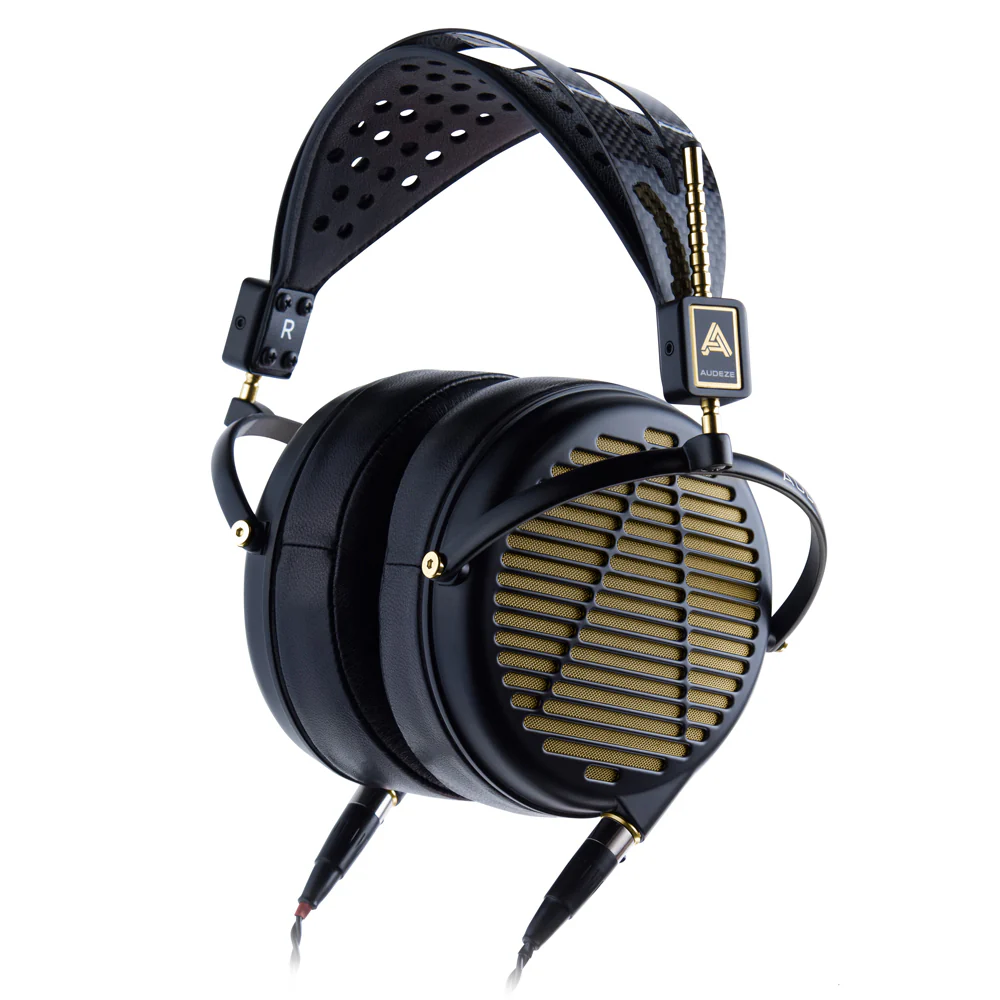
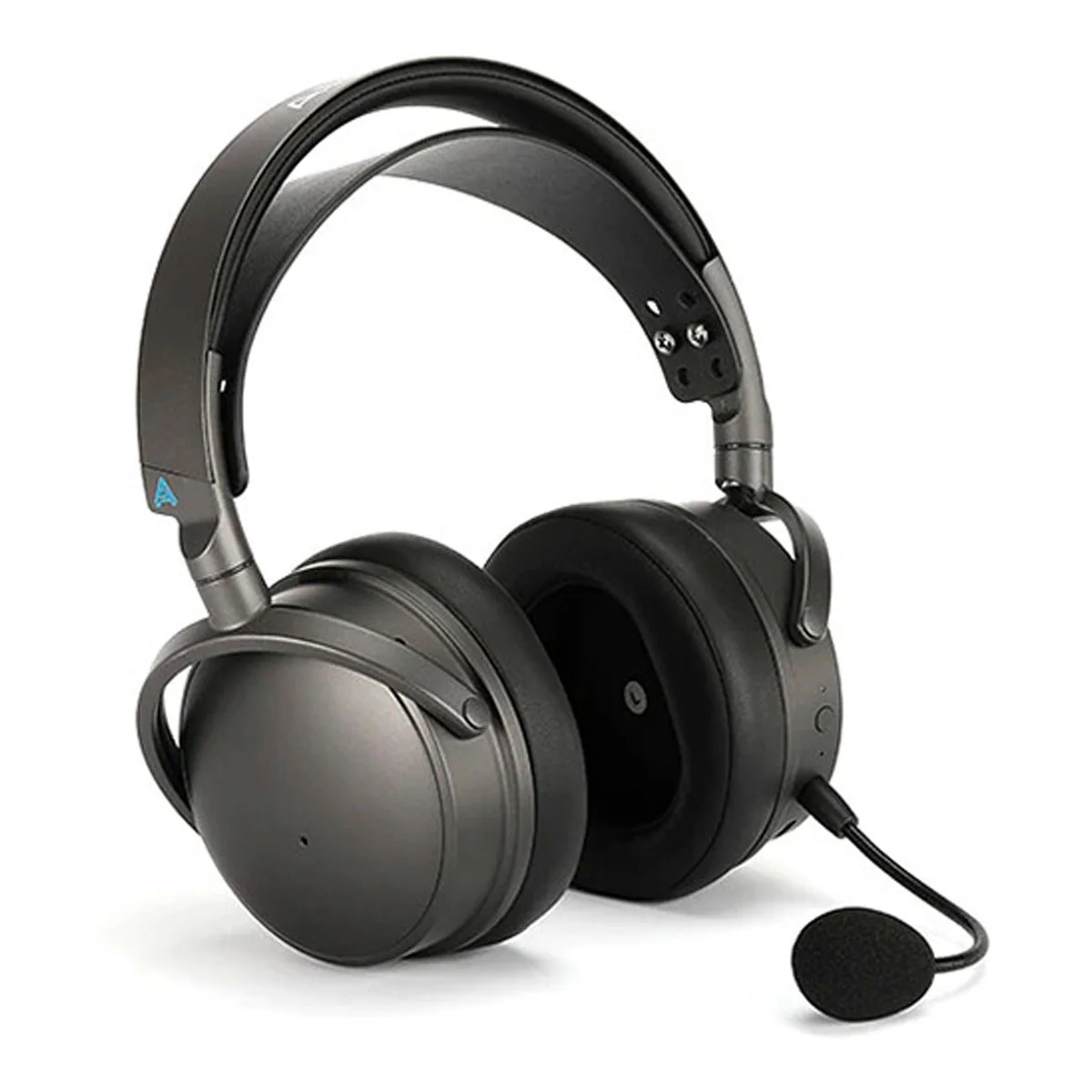
- Magnetic Ear Pads: This is a massive quality-of-life upgrade. The new pads attach magnetically, making swapping and replacing them completely effortless. Plus, we found the pads to be slightly wider and plusher, providing a much more reliable seal around the ear to lock in those planar bass frequencies.
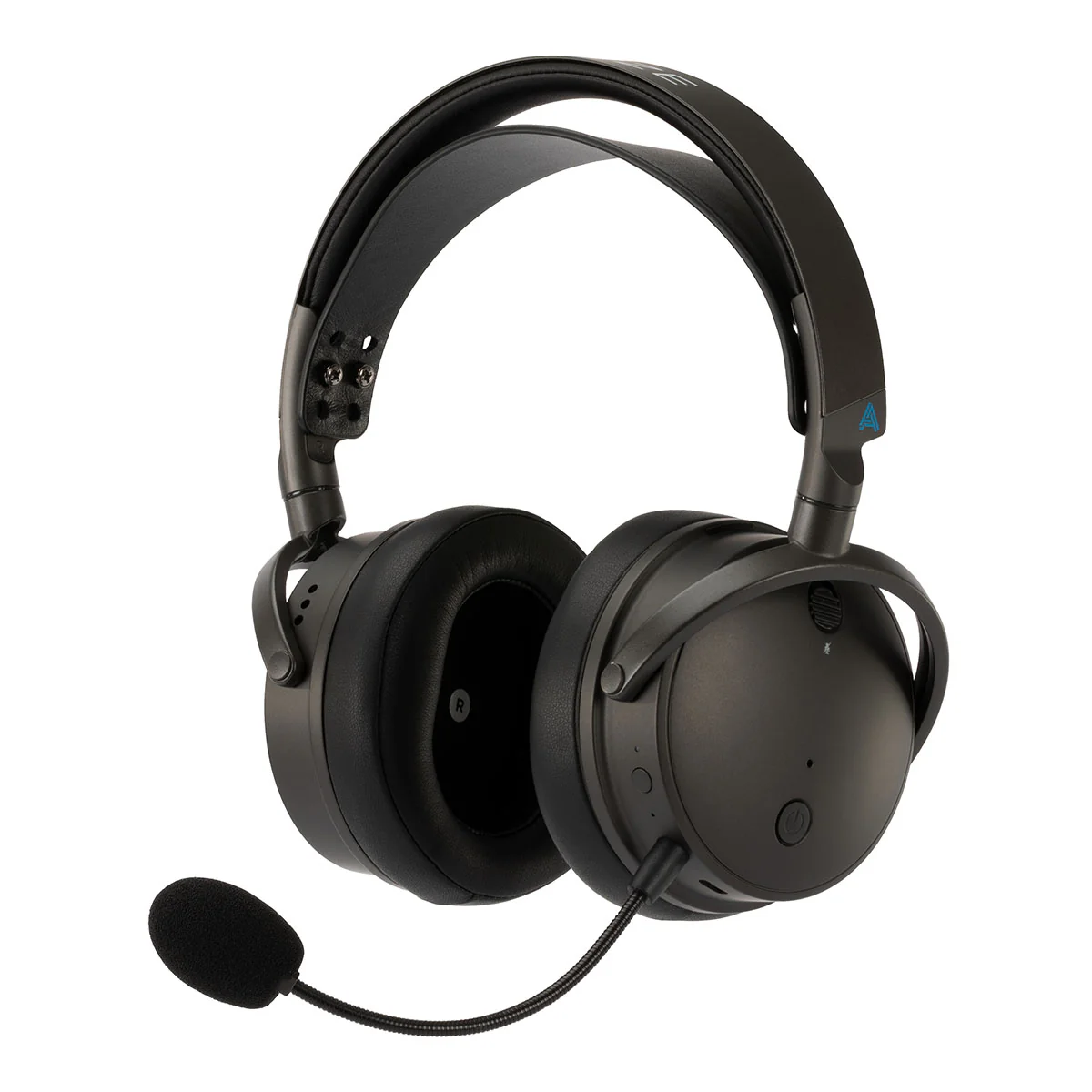
- Customizable Outer Caps: The Maxwell 2 introduces removable, twist-off outer caps for personalized aesthetics. While a fun touch for streamers and modders, accommodating these caps meant Audeze had to relocate some onboard controls, most notably shrinking the mic mute switch, which we did find to be a bit fiddly to operate mid-game.
- Upgraded Head Strap: To combat fatigue, the suspension strap is now wider and perforated, doing a much better job of distributing the headset's substantial weight over a larger surface area on your head.


Design, Build Quality & Comfort
When you unbox the Maxwell 2, it immediately feels like premium audio gear. The chassis is constructed from high-quality aluminum and steel, far surpassing the creaky plastic feel of typical mainstream gaming headsets. We also loved the new recessed dials on the ear cups, which completely eliminated the accidental volume bumps we used to sometimes get when leaning back in our gaming chairs.
The Elephant in the Room: Weight
Because this headset houses massive 90mm magnetic drivers, robust metal yokes, and a massive battery, it is incredibly heavy—clocking in at over 560 grams (over 10% heavier than the original Maxwell). While the new head strap definitely helps distribute the load, mass is still mass. During our longer testing sessions, we found that the weight does become noticeable right around the two-hour mark. If you’re sensitive to neck fatigue, you might find yourself taking these off during long loading screens to give your neck a stretch.
Isolation & Fit
The clamping force is moderate and comfortable. Because it is a closed-back design with a fantastic seal from the new plush pads, passive noise isolation is excellent. It easily blocked out keyboards and office chatter in our lab. Just note that the closed-back leatherette pads can retain heat, so expect some warmth during long sessions. While upgrading to a more breathable material may have you lose out on some passive noice canceling quality, it’s easy enough to buy a pair and pop them on when you start to get too warm.

Features, Connectivity & Usability
Battery Life
Nothing is more frustrating than a dead battery mid-match. Audeze packed a massive 1,800mAh Lithium-Polymer battery into the Maxwell 2, allowing for up to 80 hours of battery life. We can confirm this isn't just marketing hype. Over a full week of multi-hour evening gaming sessions, we were only draining about 20% of the battery. You simply stop worrying about battery life altogether with the Maxwell 2’s.
Connectivity
The Maxwell 2 offers a low-latency USB-C dongle, USB-C wired audio, a 3.5mm analog connection, and a Bluetooth 5.3 connection. It even supports high-res codecs like LDAC and LC3plus, meaning your music is going to sound phenomenal.
However, there is a major catch: The Maxwell 2 does not support true simultaneous audio mixing. If you are used to headsets from SteelSeries or Astro that let you hear game audio from your console and Discord audio from your phone at the exact same time, you will not find that here. The Maxwell uses source prioritization. If you are gaming via the dongle and a notification or call comes through on your Bluetooth-connected phone, the headset will take over the feed, cutting out your game audio entirely.
Because of this, the Bluetooth here isn't a multitasking gaming tool; it’s strictly a convenience feature for when you put the controller down and want to use the Maxwell 2 as a dedicated pair of high-fidelity music headphones. Although, we would recommend using a wired connection for the highest resolution, instead of the Bluetooth when you listen to music.
Audio Advice Pro-Tip: USB-C vs. 3.5mm Analog Speaking of wired connections, here is a crucial tip: if you want to use the Maxwell 2 wired for critical listening, always use the USB-C cable over the 3.5mm analog jack. The USB-C connection feeds a pure, uncompressed digital signal directly into the headset, acting as its own internal DAC and delivering flawless 24-bit/96kHz high-res audio.
You might be wondering—why not plug the 3.5mm jack into a high-end external DAC or headphone amp (like a Chord Mojo 2) to get even better sound? The truth is that the Maxwell 2 does not have a "passive" mode. When you feed it an analog signal, the headset must remain powered on to run that signal through an internal Analog-to-Digital Converter (ADC), apply its built-in DSP/EQ, and convert it back to analog. You cannot bypass its internal electronics, meaning an expensive external DAC won't actually improve the performance here.
So why include the 3.5mm jack at all? It’s there for universal compatibility. It’s perfect for plugging directly into a PSVR2 or Meta Quest 3 headset, running straight into a console controller if you take the headset to a friend's house, or hooking up to an in-flight entertainment screen on an airplane. Treat it as a highly convenient fallback option, not an audiophile port.
Dolby Atmos Integration (Xbox/PC Version)
For PC or Xbox users, the Xbox version of the Maxwell includes an embedded Dolby Atmos license. This lets you take full advantage of spatial audio soundtracks on today’s games via the Dolby Access app. For audio professionals working in Dolby Atmos production, this is a massive perk, allowing you to preview your work in full Atmos and utilize head-tracking integration for the Atmos Renderer. (Note: The PlayStation version uses Sony's Tempest 3D audio instead).
Controls and The New "Audeze HQ" App
On the left earcup, you will find your connectivity ports—the 3.5mm analog jack, the USB-C port for charging and wired audio, and the input for the removable boom mic. It also houses two newly recessed dials for master volume and game/chat mix. We really like these dials; pressing them in allows you to cycle through EQ presets and side-tone levels, aided by incredibly helpful built-in voice prompts so you never have to guess what setting you are on.
Over on the right earcup, you have the power button and the mic mute switch. In our testing, this new mute switch was one of our few ergonomic gripes. To accommodate the new customizable outer plates, Audeze shrunk the mute switch and tucked it at the bottom of the cup. It is tiny, recessed, and can be frustratingly hard to find and flick quickly in the heat of a match. We definitely preferred the larger, easier-to-reach mute toggle on the back of the version 1 earcups. It isn’t terrible, and you do get used to it, but it feels like a slight downgrade in usability.
Finally, the Audeze HQ app (available on PC, Mac, and mobile) has been completely overhauled. It now offers a buttery-smooth interface to adjust the multi-band EQ, fine-tune voice prompts, and tweak your mic's noise reduction settings with ease.

Audio & Microphone Performance
Gaming: Positional Dominance
In our chaotic Battlefield testing, the layering and separation were spectacular. The precise directionality—even without artificial surround sound—is uncanny. We could clearly hear an enemy shuffling up a staircase to our left while a jet flew overhead, without either sound stepping on the other.
It is worth noting that while the planar drivers deliver highly accurate bass, they don't produce the literal, physical "head-rumble" of dynamic drivers found in headsets like the Astro A50. Some of our testers missed that physical thump for pure cinematic immersion, but for pure competitive advantage, the Maxwell 2 is unmatched.
Music & Movies: Audiophile Clarity
For music, the Maxwell 2 is a true reference headphone. The frequency response is wonderfully flat and accurate, offering lifelike, detailed reproduction across any genre. Out of the box, the tuning leans more analytical than "boomy." However, the drivers are incredibly EQ-friendly; if you prefer a punchier, cinematic rumble, you can boost the low-end in the app without introducing any distortion.
If you love the idea of a planar magnetic gaming headset but prefer a purely analog, open-back wired design for an even wider soundstage, be sure to check out our Audeze LCD-GX review.
Dual-Microphone System
Designed with input from Shure Electronics, the Maxwell 2 features a versatile dual-mic setup:
- The Boom Mic: When plugged in, a dedicated A.I. processor uses the boom mic and onboard beamforming mics to obliterate background noise. In our Discord tests, turning the A.I. noise reduction to "Low" perfectly eliminated keyboard clatter while keeping voices clear. Leaving it on "High," however, made our voices sound a bit too compressed and robotic.
- Internal Beamforming Array: If you remove the boom mic to take the headphones on the go, the internal mics automatically take over, easily picking up your voice for phone calls without looking like you are wearing a gaming headset in public.

At a Glance: Is the Maxwell 2 Right For You?
| Who It’s For | Who Should Pass |
| Audiophiles wanting a wireless headset that excels at high-fidelity, 24-bit/96kHz music and movies. | Travelers looking for a lightweight, foldable, throw-in-the-bag headphone. |
| Competitive Gamers who rely on pristine detail, sound separation, and hyper-accurate directional cues. | Multi-taskers who absolutely require simultaneous Bluetooth and USB dongle audio mixing. |
| Power Users who want an 80-hour battery life and deep, distortion-free EQ customization. | Gamers sensitive to heavy headsets; the 560g weight is highly noticeable over long sessions. |

Final Verdict
The Audeze Maxwell 2 remains one of the most impressive-sounding wireless gaming headsets on the market today. It successfully bridges the gap between a high-end audiophile reference monitor and a feature-rich gaming headset. While the hefty 560g physical weight and lack of simultaneous Bluetooth audio mixing keep it from being absolutely flawless, its class-leading planar magnetic soundstage, pristine clarity, and unbelievable 80-hour battery life make it an easy recommendation.
We’re Here to Help!
Have questions about the Audeze Maxwell 2 headset? Contact our experts via chat, phone, or email. You can also visit one of our world-class showrooms to experience it for yourself.
Planning a media room? Check out our Home Theater Design page, featuring our FREE Home Theater Design Tool to visualize your perfect setup.
Why Buy From Audio Advice?
- Trusted Since 1978: We are audio experts, not just a retailer.
- Lifetime Expert Support: We are here for you long after the purchase.
- Price Guarantee & Free Shipping: Shop with total confidence.
Product Information
Product Information
Shipping & Returns
Shipping & Returns
Description
Born from a company that started in a Southern California garage on a quest to adapt NASA technology for high-resolution audio, Audeze has a reputation for building some of the world's most technically advanced headphones. The new Maxwell 2 gaming headset takes their legendary planar magnetic driver technology and delivers what gamers actually need: hyper-precise directional imaging for competitive play, audiophile-grade immersion for cinematic games, and a monstrous battery life so the headset never dies mid-session.
When we got these into our testing lab, we wanted to see if they could truly bridge the gap between a competitive shooter headset and a cinematic single-player experience. What we found was a headset that effortlessly handles both, while still feeling like true reference-grade audio gear when you throw on a high-res music playlist, setting it apart from most other gaming headsets on the market today.
Let’s dig into the technology driving this headset, what has changed from the original award-winning Maxwell, and why the Maxwell 2 has become such an easy recommendation for anyone who wants one headset that can do it all.
What is Planar Magnetic Technology?
To understand why the Maxwell 2 sounds so different from a standard gaming headset, you have to understand the drivers. Most gaming headsets use traditional dynamic drivers (essentially tiny cones pushed by a voice coil). The Maxwell 2 utilizes massive 90mm Planar Magnetic drivers.
Instead of a cone, a planar magnetic driver uses an ultra-thin, lightweight diaphragm suspended between magnetic arrays. Audeze takes this a step further with three proprietary technologies:
- Uniforce™ Voice Coils: Delivers uniform driving force across the entire diaphragm to achieve near-zero distortion.
- Fluxor™ Magnets: An incredibly powerful magnetic array that doubles the driving power for high efficiency.
- Fazor™ Waveguides: Manages the flow of sound waves to prevent resonance, resulting in a more accurate frequency response and holographic 3D imaging.
What’s New: Maxwell 2 vs. Maxwell 1
Audeze didn't reinvent the wheel with the Maxwell 2; they polished a formula that was already winning awards.
During our A/B testing between the original Maxwell and the Maxwell 2, a few core differences immediately stood out:
- S.L.A.M. Acoustic Management: Trickling down from Audeze's $6,000 flagship headphones, the new SLAM (Slam Acoustic Management) system reshapes how bass energy behaves within the ear cup. Out of the box, our team found it delivers a warmer, slightly friendlier tuning with fantastic body. It isn't necessarily a massive increase in literal bass quantity, but rather a highly controlled, incredibly separated low-end that responds beautifully to EQ.
- Magnetic Ear Pads: This is a massive quality-of-life upgrade. The new pads attach magnetically, making swapping and replacing them completely effortless. Plus, we found the pads to be slightly wider and plusher, providing a much more reliable seal around the ear to lock in those planar bass frequencies.
- Customizable Outer Caps: The Maxwell 2 introduces removable, twist-off outer caps for personalized aesthetics. While a fun touch for streamers and modders, accommodating these caps meant Audeze had to relocate some onboard controls, most notably shrinking the mic mute switch, which we did find to be a bit fiddly to operate mid-game.
- Upgraded Head Strap: To combat fatigue, the suspension strap is now wider and perforated, doing a much better job of distributing the headset's substantial weight over a larger surface area on your head.
Design, Build Quality & Comfort
When you unbox the Maxwell 2, it immediately feels like premium audio gear. The chassis is constructed from high-quality aluminum and steel, far surpassing the creaky plastic feel of typical mainstream gaming headsets. We also loved the new recessed dials on the ear cups, which completely eliminated the accidental volume bumps we used to sometimes get when leaning back in our gaming chairs.
The Elephant in the Room: Weight
Because this headset houses massive 90mm magnetic drivers, robust metal yokes, and a massive battery, it is incredibly heavy—clocking in at over 560 grams (over 10% heavier than the original Maxwell). While the new head strap definitely helps distribute the load, mass is still mass. During our longer testing sessions, we found that the weight does become noticeable right around the two-hour mark. If you’re sensitive to neck fatigue, you might find yourself taking these off during long loading screens to give your neck a stretch.
Isolation & Fit
The clamping force is moderate and comfortable. Because it is a closed-back design with a fantastic seal from the new plush pads, passive noise isolation is excellent. It easily blocked out keyboards and office chatter in our lab. Just note that the closed-back leatherette pads can retain heat, so expect some warmth during long sessions. While upgrading to a more breathable material may have you lose out on some passive noice canceling quality, it’s easy enough to buy a pair and pop them on when you start to get too warm.
Features, Connectivity & Usability
Battery Life
Nothing is more frustrating than a dead battery mid-match. Audeze packed a massive 1,800mAh Lithium-Polymer battery into the Maxwell 2, allowing for up to 80 hours of battery life. We can confirm this isn't just marketing hype. Over a full week of multi-hour evening gaming sessions, we were only draining about 20% of the battery. You simply stop worrying about battery life altogether with the Maxwell 2’s.
Connectivity
The Maxwell 2 offers a low-latency USB-C dongle, USB-C wired audio, a 3.5mm analog connection, and a Bluetooth 5.3 connection. It even supports high-res codecs like LDAC and LC3plus, meaning your music is going to sound phenomenal.
However, there is a major catch: The Maxwell 2 does not support true simultaneous audio mixing. If you are used to headsets from SteelSeries or Astro that let you hear game audio from your console and Discord audio from your phone at the exact same time, you will not find that here. The Maxwell uses source prioritization. If you are gaming via the dongle and a notification or call comes through on your Bluetooth-connected phone, the headset will take over the feed, cutting out your game audio entirely.
Because of this, the Bluetooth here isn't a multitasking gaming tool; it’s strictly a convenience feature for when you put the controller down and want to use the Maxwell 2 as a dedicated pair of high-fidelity music headphones. Although, we would recommend using a wired connection for the highest resolution, instead of the Bluetooth when you listen to music.
Audio Advice Pro-Tip: USB-C vs. 3.5mm Analog Speaking of wired connections, here is a crucial tip: if you want to use the Maxwell 2 wired for critical listening, always use the USB-C cable over the 3.5mm analog jack. The USB-C connection feeds a pure, uncompressed digital signal directly into the headset, acting as its own internal DAC and delivering flawless 24-bit/96kHz high-res audio.
You might be wondering—why not plug the 3.5mm jack into a high-end external DAC or headphone amp (like a Chord Mojo 2) to get even better sound? The truth is that the Maxwell 2 does not have a "passive" mode. When you feed it an analog signal, the headset must remain powered on to run that signal through an internal Analog-to-Digital Converter (ADC), apply its built-in DSP/EQ, and convert it back to analog. You cannot bypass its internal electronics, meaning an expensive external DAC won't actually improve the performance here.
So why include the 3.5mm jack at all? It’s there for universal compatibility. It’s perfect for plugging directly into a PSVR2 or Meta Quest 3 headset, running straight into a console controller if you take the headset to a friend's house, or hooking up to an in-flight entertainment screen on an airplane. Treat it as a highly convenient fallback option, not an audiophile port.
Dolby Atmos Integration (Xbox/PC Version)
For PC or Xbox users, the Xbox version of the Maxwell includes an embedded Dolby Atmos license. This lets you take full advantage of spatial audio soundtracks on today’s games via the Dolby Access app. For audio professionals working in Dolby Atmos production, this is a massive perk, allowing you to preview your work in full Atmos and utilize head-tracking integration for the Atmos Renderer. (Note: The PlayStation version uses Sony's Tempest 3D audio instead).
Controls and The New "Audeze HQ" App
On the left earcup, you will find your connectivity ports—the 3.5mm analog jack, the USB-C port for charging and wired audio, and the input for the removable boom mic. It also houses two newly recessed dials for master volume and game/chat mix. We really like these dials; pressing them in allows you to cycle through EQ presets and side-tone levels, aided by incredibly helpful built-in voice prompts so you never have to guess what setting you are on.
Over on the right earcup, you have the power button and the mic mute switch. In our testing, this new mute switch was one of our few ergonomic gripes. To accommodate the new customizable outer plates, Audeze shrunk the mute switch and tucked it at the bottom of the cup. It is tiny, recessed, and can be frustratingly hard to find and flick quickly in the heat of a match. We definitely preferred the larger, easier-to-reach mute toggle on the back of the version 1 earcups. It isn’t terrible, and you do get used to it, but it feels like a slight downgrade in usability.
Finally, the Audeze HQ app (available on PC, Mac, and mobile) has been completely overhauled. It now offers a buttery-smooth interface to adjust the multi-band EQ, fine-tune voice prompts, and tweak your mic's noise reduction settings with ease.
Audio & Microphone Performance
Gaming: Positional Dominance
In our chaotic Battlefield testing, the layering and separation were spectacular. The precise directionality—even without artificial surround sound—is uncanny. We could clearly hear an enemy shuffling up a staircase to our left while a jet flew overhead, without either sound stepping on the other.
It is worth noting that while the planar drivers deliver highly accurate bass, they don't produce the literal, physical "head-rumble" of dynamic drivers found in headsets like the Astro A50. Some of our testers missed that physical thump for pure cinematic immersion, but for pure competitive advantage, the Maxwell 2 is unmatched.
Music & Movies: Audiophile Clarity
For music, the Maxwell 2 is a true reference headphone. The frequency response is wonderfully flat and accurate, offering lifelike, detailed reproduction across any genre. Out of the box, the tuning leans more analytical than "boomy." However, the drivers are incredibly EQ-friendly; if you prefer a punchier, cinematic rumble, you can boost the low-end in the app without introducing any distortion.
If you love the idea of a planar magnetic gaming headset but prefer a purely analog, open-back wired design for an even wider soundstage, be sure to check out our Audeze LCD-GX review.
Dual-Microphone System
Designed with input from Shure Electronics, the Maxwell 2 features a versatile dual-mic setup:
- The Boom Mic: When plugged in, a dedicated A.I. processor uses the boom mic and onboard beamforming mics to obliterate background noise. In our Discord tests, turning the A.I. noise reduction to "Low" perfectly eliminated keyboard clatter while keeping voices clear. Leaving it on "High," however, made our voices sound a bit too compressed and robotic.
- Internal Beamforming Array: If you remove the boom mic to take the headphones on the go, the internal mics automatically take over, easily picking up your voice for phone calls without looking like you are wearing a gaming headset in public.
At a Glance: Is the Maxwell 2 Right For You?
| Who It’s For | Who Should Pass |
| Audiophiles wanting a wireless headset that excels at high-fidelity, 24-bit/96kHz music and movies. | Travelers looking for a lightweight, foldable, throw-in-the-bag headphone. |
| Competitive Gamers who rely on pristine detail, sound separation, and hyper-accurate directional cues. | Multi-taskers who absolutely require simultaneous Bluetooth and USB dongle audio mixing. |
| Power Users who want an 80-hour battery life and deep, distortion-free EQ customization. | Gamers sensitive to heavy headsets; the 560g weight is highly noticeable over long sessions. |
Final Verdict
The Audeze Maxwell 2 remains one of the most impressive-sounding wireless gaming headsets on the market today. It successfully bridges the gap between a high-end audiophile reference monitor and a feature-rich gaming headset. While the hefty 560g physical weight and lack of simultaneous Bluetooth audio mixing keep it from being absolutely flawless, its class-leading planar magnetic soundstage, pristine clarity, and unbelievable 80-hour battery life make it an easy recommendation.
We’re Here to Help!
Have questions about the Audeze Maxwell 2 headset? Contact our experts via chat, phone, or email. You can also visit one of our world-class showrooms to experience it for yourself.
Planning a media room? Check out our Home Theater Design page, featuring our FREE Home Theater Design Tool to visualize your perfect setup.
Why Buy From Audio Advice?
- Trusted Since 1978: We are audio experts, not just a retailer.
- Lifetime Expert Support: We are here for you long after the purchase.
- Price Guarantee & Free Shipping: Shop with total confidence.