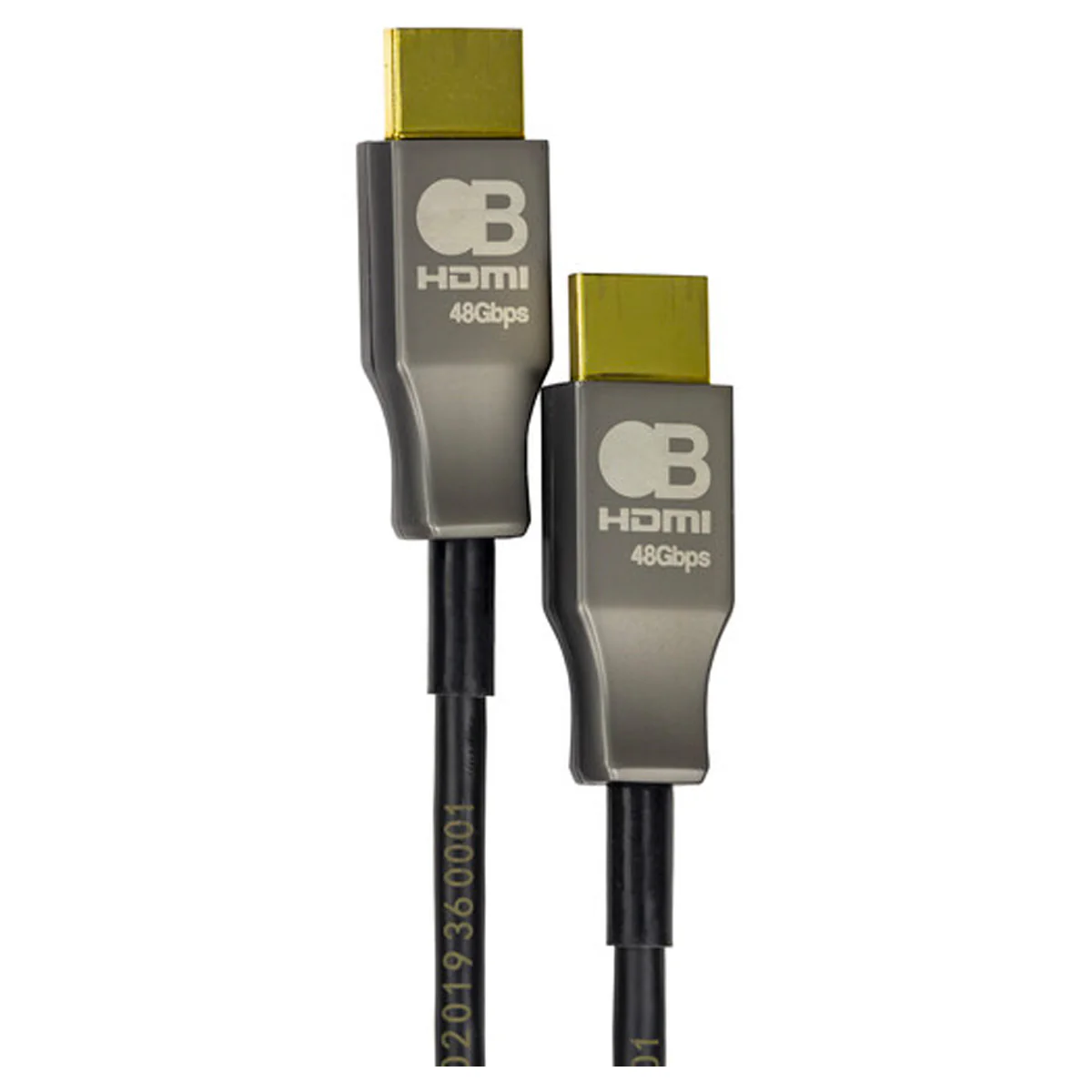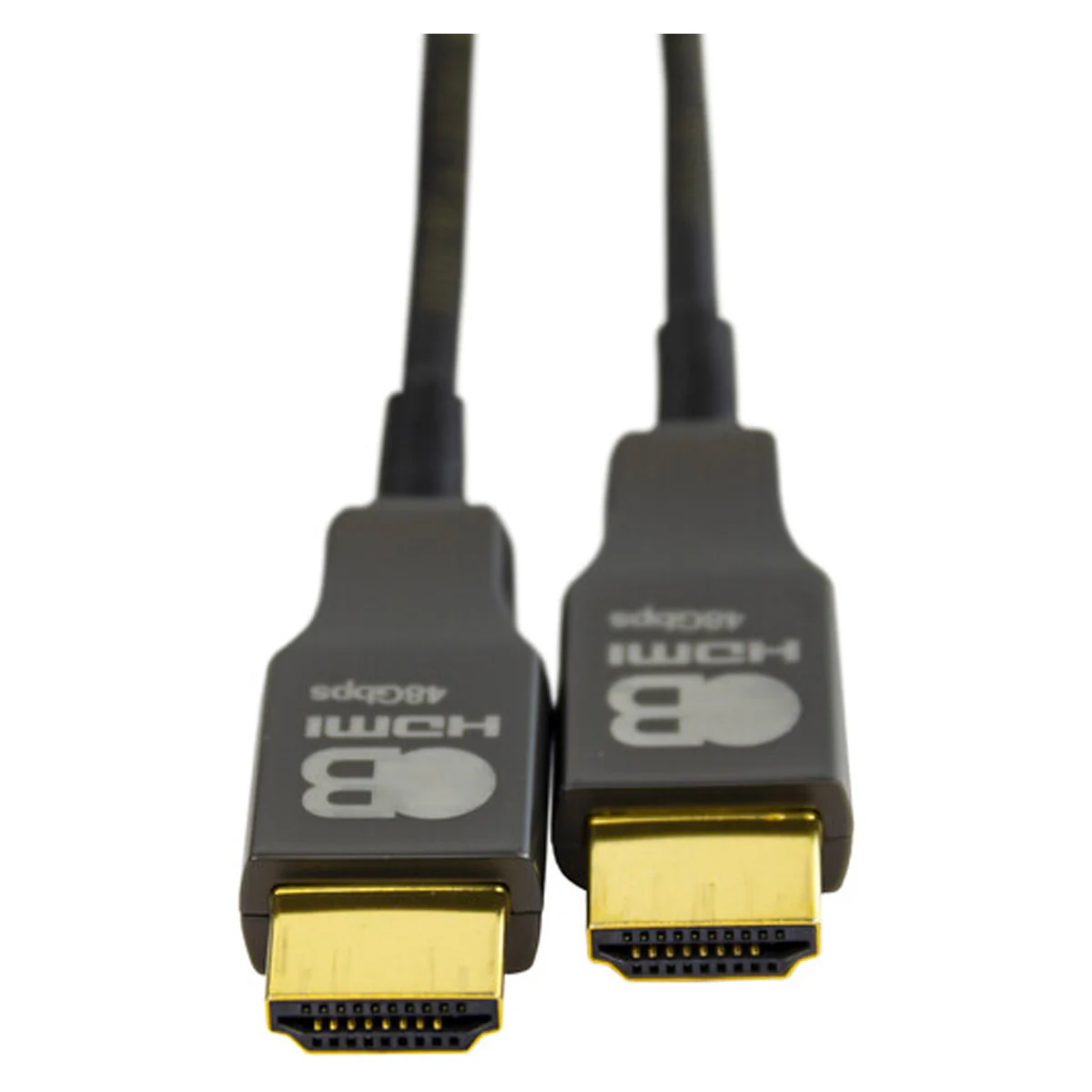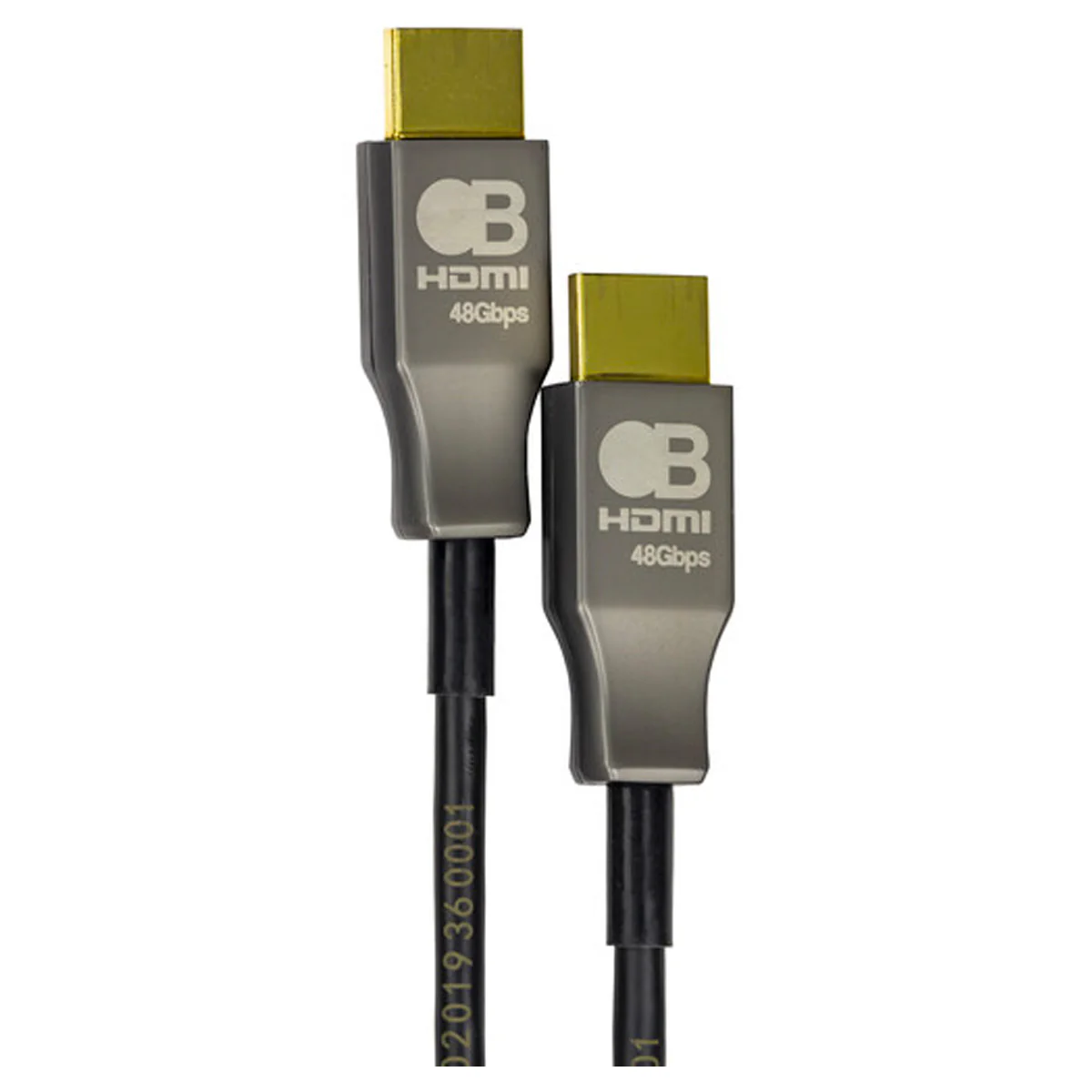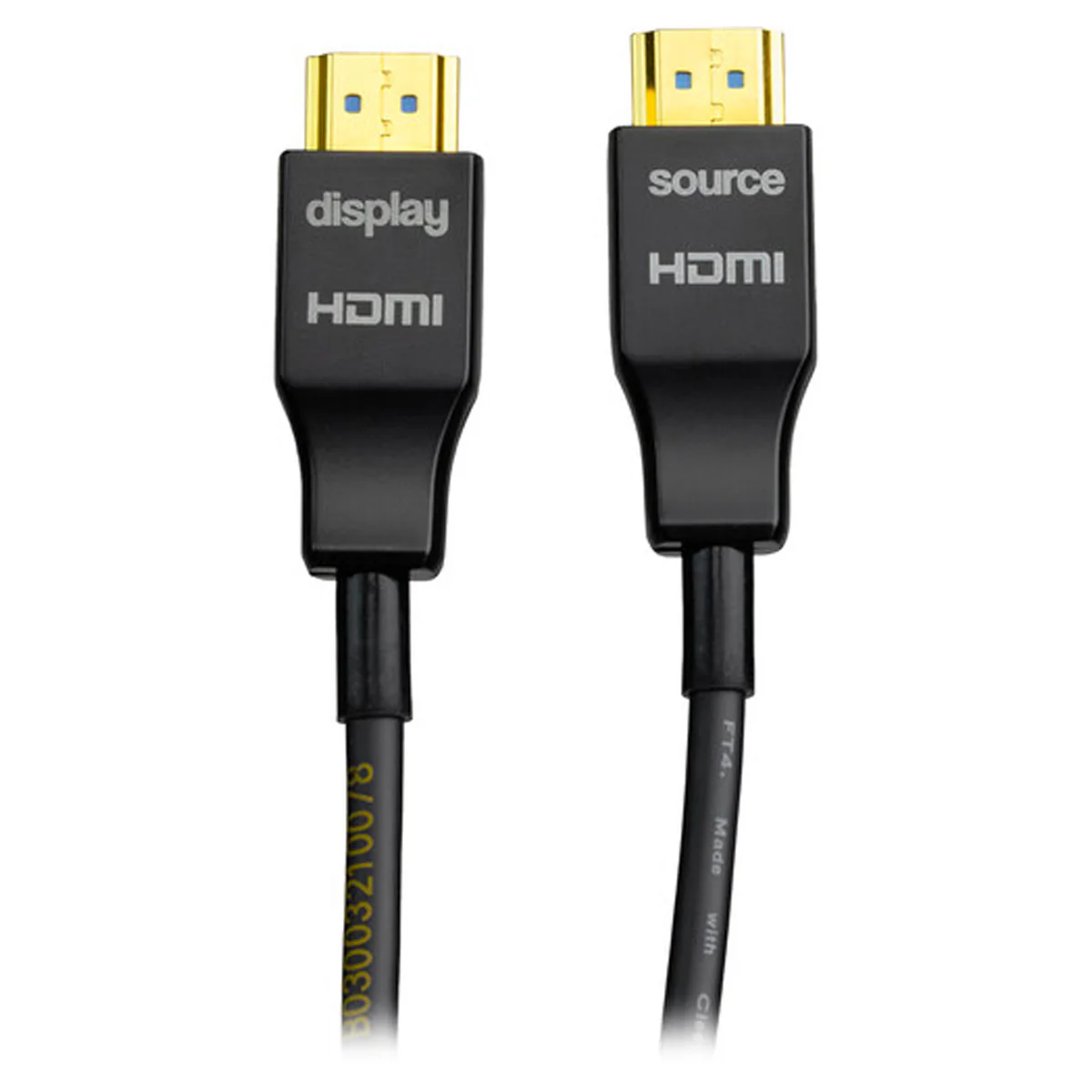
Bullet Train 5K Active Optical HDMI Cable
The AOC Advantage
Some poor-quality sources fail to function adequately in distributed systems, whereby the source is traveling through several components. If you have a flawed source, you have to reduce insertion loss – which is ever-present with copper. The only way to combat it is to use a thicker gauge copper cable. Using fiber optics allows you to “fix” problem sources without using longer/thicker cables.
The signal construct is different on fiber optic cables. Fiber does not require equalization to work correctly, meaning that you are not reliant on the TV to be applying the proper length of EQ per HDMI Spec. If you have a copper cable and the TV or Sink is even on EQ stage off, you will get problems. Since fiber is not beholden to this problem – you can see better performance.
- Input Lag – For gamers or mission-critical environments, these can reduce input lag by 20%.
- Interference – Heavy electromagnetic places (like a rack room) can interfere with HDMI or HDBaseT. These cables are not susceptible to EMI. Meaning you are circumventing yet another potential problem.
- Bandwidth – Each TMDS line has a dedicated piece of fiber, meaning you have four strands of fiber at 40 Gbps per lane. It’s possible to repurpose these fiber strands for future applications.
- Size – Using fiber is the most effective way to make thin cables.
- Power – Unlike other AOC cables that use a lot of energy for their fiber transmission, resulting in the need for additional power adapters. These cables use less energy to power the fiber technology. No more supplemental power is required.
Refresh Rate
This HDMI cable supports the HDMI 2.0 refresh rate range, which becomes extremely important as you push the limit of frames per second. Bullet Train allows the display to match the speed at which frames are traveling through the HDMI cable. This ensures the timing at these extremely minuscule measurements are displayed accurately and efficiently.
Increased Frame Rate
With HDMI 2.0 specifications, these cables can reach data rates up to 60 FPS. This allows them to more than double the standard Frame Rates seen on HDMI of 24 frames-per-second (FPS) to 60 FPS.
Color Accuracy
Bullet Train cabling comes from a family of HDMI Testing and Display Calibration, which is why they can offer Imaging Science Foundation (ISF) certification on every single cable they sell. ISF is a leader in scientifically accurate display coloring, when you run a signal through this HDMI cable you are seeing the vibrant colors the content was mastered in.
What's Inside?
Once you have a Bullet Train AOC cable, you also have four Cleerline SSF Fiber Optic strands. This fiber is ready for over 100Gbps, and you can terminate it when HDMI technology becomes outdated!
- Step 1: Run cable
- Step 2: Use cable for years
- Step 3: Ten years down the line, cut off the end of the cable and you have four terminable OM2 Fiber Optic strands
- Step 4: Using any termination kit, you can now use these fiber strands for data, A/V, control, telephone, or any signal that runs over fiber
Product Information
Product Information
Shipping & Returns
Shipping & Returns
Description
The AOC Advantage
Some poor-quality sources fail to function adequately in distributed systems, whereby the source is traveling through several components. If you have a flawed source, you have to reduce insertion loss – which is ever-present with copper. The only way to combat it is to use a thicker gauge copper cable. Using fiber optics allows you to “fix” problem sources without using longer/thicker cables.
The signal construct is different on fiber optic cables. Fiber does not require equalization to work correctly, meaning that you are not reliant on the TV to be applying the proper length of EQ per HDMI Spec. If you have a copper cable and the TV or Sink is even on EQ stage off, you will get problems. Since fiber is not beholden to this problem – you can see better performance.
- Input Lag – For gamers or mission-critical environments, these can reduce input lag by 20%.
- Interference – Heavy electromagnetic places (like a rack room) can interfere with HDMI or HDBaseT. These cables are not susceptible to EMI. Meaning you are circumventing yet another potential problem.
- Bandwidth – Each TMDS line has a dedicated piece of fiber, meaning you have four strands of fiber at 40 Gbps per lane. It’s possible to repurpose these fiber strands for future applications.
- Size – Using fiber is the most effective way to make thin cables.
- Power – Unlike other AOC cables that use a lot of energy for their fiber transmission, resulting in the need for additional power adapters. These cables use less energy to power the fiber technology. No more supplemental power is required.
Refresh Rate
This HDMI cable supports the HDMI 2.0 refresh rate range, which becomes extremely important as you push the limit of frames per second. Bullet Train allows the display to match the speed at which frames are traveling through the HDMI cable. This ensures the timing at these extremely minuscule measurements are displayed accurately and efficiently.
Increased Frame Rate
With HDMI 2.0 specifications, these cables can reach data rates up to 60 FPS. This allows them to more than double the standard Frame Rates seen on HDMI of 24 frames-per-second (FPS) to 60 FPS.
Color Accuracy
Bullet Train cabling comes from a family of HDMI Testing and Display Calibration, which is why they can offer Imaging Science Foundation (ISF) certification on every single cable they sell. ISF is a leader in scientifically accurate display coloring, when you run a signal through this HDMI cable you are seeing the vibrant colors the content was mastered in.
What's Inside?
Once you have a Bullet Train AOC cable, you also have four Cleerline SSF Fiber Optic strands. This fiber is ready for over 100Gbps, and you can terminate it when HDMI technology becomes outdated!
- Step 1: Run cable
- Step 2: Use cable for years
- Step 3: Ten years down the line, cut off the end of the cable and you have four terminable OM2 Fiber Optic strands
- Step 4: Using any termination kit, you can now use these fiber strands for data, A/V, control, telephone, or any signal that runs over fiber